Showing posts with label Ethical Business. Show all posts

Friday, June 12, 2015

Happy Mattress!

Scores of followers have been begging me to tell, did we get the mattress?  Well the answer is YES, and what's more, by happy coincidence, delivered just in time for my birthday tomorrow Happy Birthday Mattress to Me.  (other than this my birthday is forgotten in the panic leading up to Bs final exams (bac).

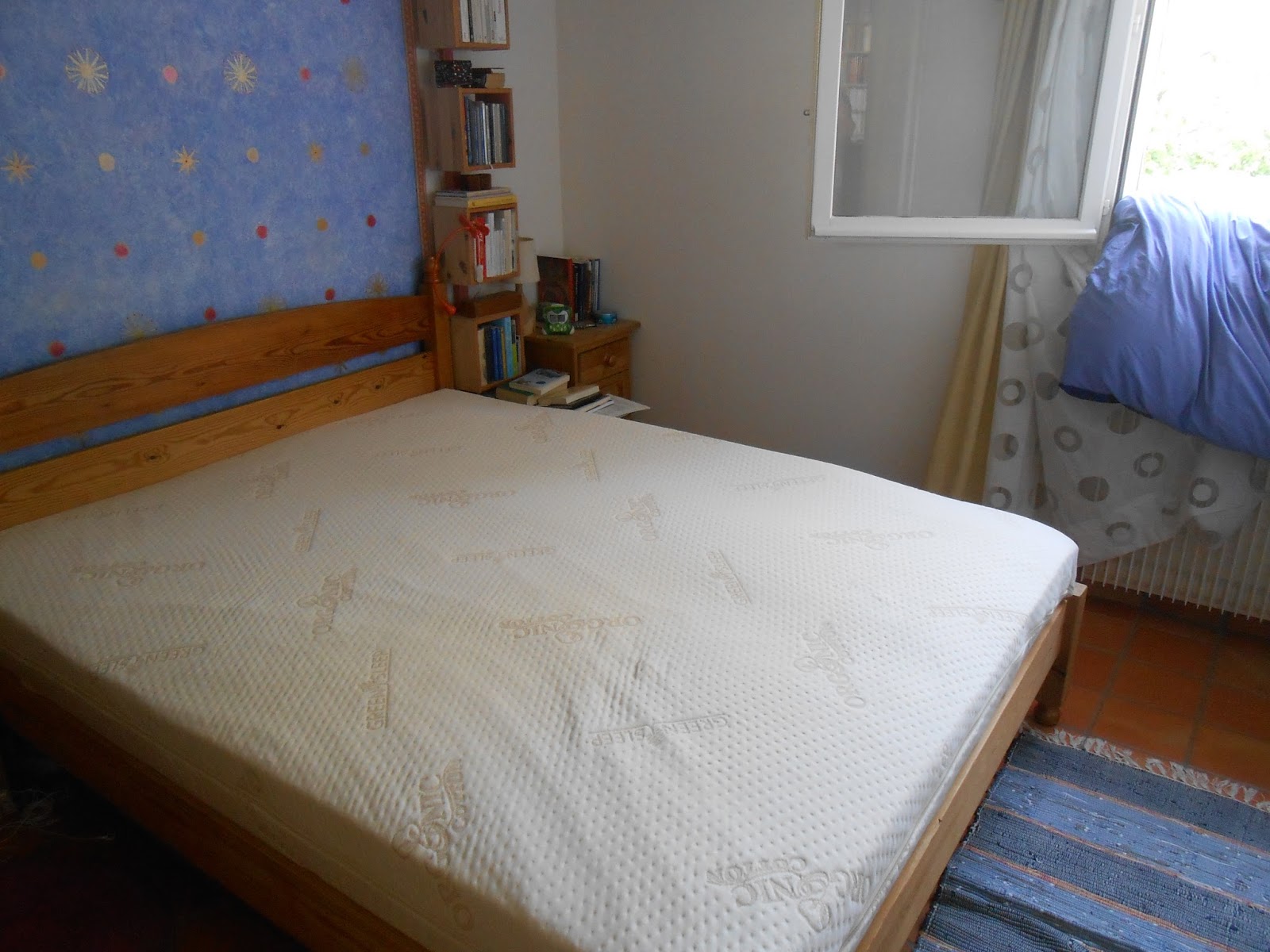
After a thoroughly enjoyable and very long and broad trial in the basement of HACEA  (hacea.fr)  we were happy with this make, Greensleep (http://www.greensleep.com/fr/sur-green-sleep) and with the information and service of this shop.

Pure natural latex from well managed sources, (latex is oblivious to mites) we were invited to customise one for our particular back pleasure, with different densities of latex in different areas and on different sides, a second layer of latex over the top, all wrapped up in a soft organic cotton cover.


It is quite squidgy, almost gelatinous, and yet...

YES YES YES UPLIFTMENT (in all the right places), yelps of pleasure ring out, I am massaged by a host of mattress angels, such relief, such heavenly perfume of marshmallow, oatmilk, hay in the sun and cream of cotton. 

  • no mites
  • light for ease of bedmaking
  • smells divine
  • feels divine
  • improves quality of life immeasurably
  • will last at least 15 years, so when price is spread over this time...
I would say the best of presents to offer oneself.

Wednesday, August 7, 2013

RoboRoach, Cyborgs; the real ethical issues

When I first learned about "RoboRoach" I can only describe my reaction as a 'shudder of the soul', a shudder of horror.  Am I over-sensitive, over-compassionate?  Or is the soul shudder getting at something?


Technology project or life issue?
Moms are recommending it for kids to learn about neuroscience, young people twitter about it to their friends, BBCco.uk review it as hands-on learning, TED Global is sponsoring it, mugs and t-shirts are available...the media show is full-on, is nobody is asking any questions?

Questions for RoboRoachtm Fans

  • Do you think a living being is a machine which you can override?
  • Do you think a living being is an inert component of your construction?
  • Do you think animals are computers that you can hack into?
  • Or do you think you have to right to treat living things we think of as 'vermin' as though they were the above?
  • Do you have any respect for life, for the wisdom of nature?
  • Do you have any compassion or sensitivity towards living beings?
  • Have you thought about where this could lead, the next step? (this is the 'first' commercially available cyborg' according to the backyardbrains site)
  • Do you have any 'feelings' of discomfort in operating on a live cockroach, or if you don't have these feelings, are you aware of any in the people around you, do you think these human feelings have any value, point to anything important?
  • Do you think it is right to train children to have no respect for life or the wisdom of nature, to conduct invasive experiments on living beings, to treat life as though it were a machine, to maim living beings, to control them with their childish ideas?
  • Do you really think this is amusing?
  • Do you think this is an acceptable way to make neuroscience 'accessible' to children and youngsters?
  • How exactly does the RoboRoach toy/educational 'tool' available so that 'everyone can be a neuroscientist' (backyardbrains.com) contribute to research into neurological disease?

Teaching children about life on earth...or teaching them to disregard it?
Most of us teach our children to have respect for animal life and find their children have a natural affinity and love for animals and nature.   One of the early signs of sociopathy/psychopathy is a child who tortures or kills animals and shows no 'feeling' for another's life...  
When I was 16 and studying for A level biology, we had to dissect a cockroach.  When I got my cockroach I 'felt' it was alive.  I told the teacher, but she assured me it was thoroughly dead, from a poison in the form of a sand like powder which had entered through the 'spiracles' (little holes) on the cockroaches back.   Reluctant, I splayed my cockroach on its back, pinned down its legs, cut open its abdomen, and extracted its long white gut.  At this moment my cockroach starting jerking at its pins, ripped off its own leg, tried to run away with its guts hanging out.    I experienced another 'shudder of the soul'.  I walked out of the biology lab and never went back to dissecting.  Next term R will have to cut up a rat for biology, he will be 12 years old.   He doesn't want to do it, and feels unhappy that the rat is being killed for a casual experiment.   I don't believe it is necessary for children to cut up animals killed for that purpose, there are other better ways of learning about animals and their anatomy, plenty of virtual tools, however what it does teach them is undesirable, to harden against living creatures and treat them as experiments.

Children and experimenting on  insects;  When I was a child, whenever I saw children - I think it was only boys in my childhood - being cruel to insects - pulling their legs and wings off, trapping them and burning them with magnifying glasses, I felt the very same shudder of the soul.  I did all I could to stop them, persuade them, argue with them, set the insect free. But I knew I was the only one sensitive to the issue, that these guys didn't feel it, and that when I wasn't there, nothing would stop them having another go.  Some children do and some can't, I still feel more comfortable with the people who can't.  Should we be taking the spirit of puerile insect experimentation and selling it as fun, or as an educational tool?

I shouldn't be so sensitive, it's making an issue out of nothing?
No doubt the scientists and scientific fans of the company that 'invented' the non-living part of the remote controlled cockroach would berate me for my feelings;  they're quite used to killing and cutting up animals for their biology training and experimenting on live ones too, perhaps they are totally habituated and de-sensitised to such things;   and after all,  cockroaches are vermin they would say, they get killed all the time, they are not like humans, they're just insects, I should stop being over-sensitive, it's debateable whether cockroaches even feel pain, they get used to being overriden, there's no ethical issue at all.    But perhaps I have good reasons for being sensitive?

More Detail on the RoboRoach Project
The 'inventors' sell you the idea and a kit with all you need to make your own electrode pack, and we can all have access to a youtube video about how to make it, and about how to operate on a live cockroach.   If successful, you can get it to do what you want using your smartphone as a remote control, eg:  jump off high places, scare people, invade cockroach colonies and get them to deviate their natural behaviour, the gaming options are limitless...

The idea is you dip the cockroach in iced water which 'anaesthetises' it for a short period,  or at least stops it moving (ask no questions and I'll tell you no lies).  Then you stick it to a board and sandpaper its head to get the wax off and superglue some plastic onto it, then you pull open its wings and pierce a hole in its exoskeleton to insert a large electrode pack though the skin of its thorax, and then you cut off its antennae and replace them with components, and stick a massive (for a cockroach) plastic backpack on with hotglue.  The video gives the impression that it is teaching you how to change a plug...and you rob that cockroach of its natural state, and you impose your ideas upon it via your remote control.  When Greg Cage, 'inventor' does a demonstration of cutting off a live cockroach's leg in front of an audience a high school audience (on TEDed), the audience is visibly disgusted, and Greg comments 'yeah I know it's gross - but they can grow another one...'    He is demonstrating how an amputated leg twitches to music, a show called 'Cockroach Beatbox' (sounds like a toy/game to me).

RoboRoach;  "The world's first commercially available "Cyborg"?!?...so claim the inventor/marketers on their site.  What is a Cyborg, I hear you ask.  A 'cyborg' is a 'cybernetic organism'.  It's a science fiction creation, and the inventors of RoboRoach claim that their 'real' animal/machine is a Cyborg.  That is to say, apparently it is now an acceptable reality to take living creatures, perform invasive surgery on them in order to take away their ability and freedom to behave according to their nature and impose our will upon them...for amusement, learning or financial gain, and that this is only the beginning...

And what next?  Ideas are flowing, and new technology always obliges.  What about fish, do they feel pain?...or octopuses, or rats, they're vermin, or dogs, now that would be fun, you could get it to chase after people you hated, or what about a remote controlled sex slave, you could get her to open her legs by remote control whenever you wanted... 

Disregard for life is a dangerous thing, even if it has small beginnings.  What is going to happen if we let our most puerile, low, cruel thoughts control nature, taking life away from the wisdom of nature, which is something we have hardly even begun to comprehend?

Here is a picture of someone who stopped being over-sensitive, who readjusted her natural morality to fit with a new group (you can read about it in 'The Lucifer Effect;  why good people turn evil' by Dr Philip Zimbardo).


This all American girl with excellent orthodentistry is joking around with the body of  an Iraqi who has just been tortured to death in a horrific way by her army colleagues.  She will later help the CIA dispose of the body and make sure no questions are asked.  And here is Josef Mengele, who forgot Jews were human when he experimented on them and killed them...or the Milgram experiments where volunteer subjects 'killed' a fellow volunteer because the man in a white coat told them to...it seems to me that the idea of kidnapping a living creature and turning it into a 'robot' under your control is unhealthy, the tiny root of something which could become every bit as horrific as the above examples.   


Problems with the Inventors' responses to ethical questions
I can understand the ease with which modern science and technology and the joys of human creativity could lead us down this path, above all when our young are saturated in a virtual world of  robot video games, toys and films where the distinction between machine and life is blurred.  I recognise that the company Backyard Brains,  has responded to ethical concerns and has published its ethical statement where it  justifies itself before each claim.


  • I'm not convinced by their claim that they 'sold' the idea as a game/toy but this was only to shock and raise interest, because neuroscience is so little known, and that it is 'really'  a scientific tool for the good of the animal kingdom and humanity.  Firstly, I don't think it's true, selling the word's first commercially available Cyborg which you can operate with your smartphone is going to sound like a game to most teenagers and young men, so I think it's a cover-up after the event, and secondly, pretending it was a game is a form of lying and manipulation, this doesn't recommend the company to  me as fit educators.  
  • They claim that children and young people are more likely to appreciate cockroaches with the Cyborg version;  in that case it might occur to those children that they should observe these creatures in their natural setting, and that it is cruel to mutilate them and take away their freedom to follow their natural behaviour.
  • They admit that a cyborg might not be the best way to teach children about animal life and they are constantly surveying the animal kingdom for easier and less invasive ways of unequivocally demonstrating neural activity. How come they are so  proud to be the first company to market a cyborg then? (ref comment to financial backers on their site) 
  • They claim their experiments are done under humane conditions and the creatures do not die but live out their natural life-span happily.   Firstly, I'm not sure how they 'retire' the cockroaches now with superglued backs and no antannae, do they try to recover the equipment, or leave it on?  Secondly,  I quote the business site:  Teenagers who have bought this circuit have often done the experiments under the guidance of their parents as an educational experience.  'have often' would imply the majority have not been supervised.  Now the project has gone global, after all, 'Backyard Brains enables everyone to be a neuroscientist!'  Youtube videos are available to encourage anyone to do it at home using a smartphone.  The supervised, humane and serious side of the argument is... laughable.
  • Whatever the packaging, the whole idea of a life-based 'cyborg' is deeply flawed, abhorrent thinking.

 http://www.kickstarter.com/projects/backyardbrains/the-roboroach-control-a-living-insect-from-your-sm
and their ethical statement here:
http://wiki.backyardbrains.com/Ethical_Issues_Regarding_Using_Invertebrates_in_Education


RoboRoach and the mentality which surrounds it, is puerile cruel and potentially dangerous, yet the idea is fully backed by adults, aimed at children and youngsters and taken to the heart of their education.  It has has horrific implications:  it's right before our eyes and we don't seem to see it...

Friday, July 12, 2013

Saved by Sugru

Sugru:  For Independant Home Solutions!
 
Sugru;  Saviour of the Make Do and Mend Society!

Sugru;  Inventors Friend!


Sugru;  Champion of Customisation!

Sugru;  Over Consume No More!

Sugru:  Economise, Ecologise!

Sugru;  Valiant Knight in the fight against Planned Obsolescence


I was listening to the BBC World Service at 3am whilst ironing,  when I heard a piece on Global Business about Sugru, and Jane Ní Dhulchaointigh who recognised the need, thought of the solution, and with a team developed manufactured and marketed it.


What is Sugru?  A silicon based putty, which hardens over 24 hours to bond anything to anything, is strong, heat resistant and shock absorbant, can be mixed to colour of choice or painted and if you need to remove it can be cut off.  

Jane studied design, but instead of inventing a new need and designing a new product and encouraging consumerism, she saw things differently.  What we need, she reasoned, and so do I, is a product which helps us mend, customise, improve, the things which we have already.

In my case the things which I have already include irresistable charity shop, jumble sale and brocante purchases, old things and sentimental things which I'm too fond of to throw away, and all the new products which are shoddy, or ill-designed, and inevitably fall apart.

I went straight way to the charming internet site, and had some posted to France for a reasonable fee.  Excellent friendly site http://sugru.com/


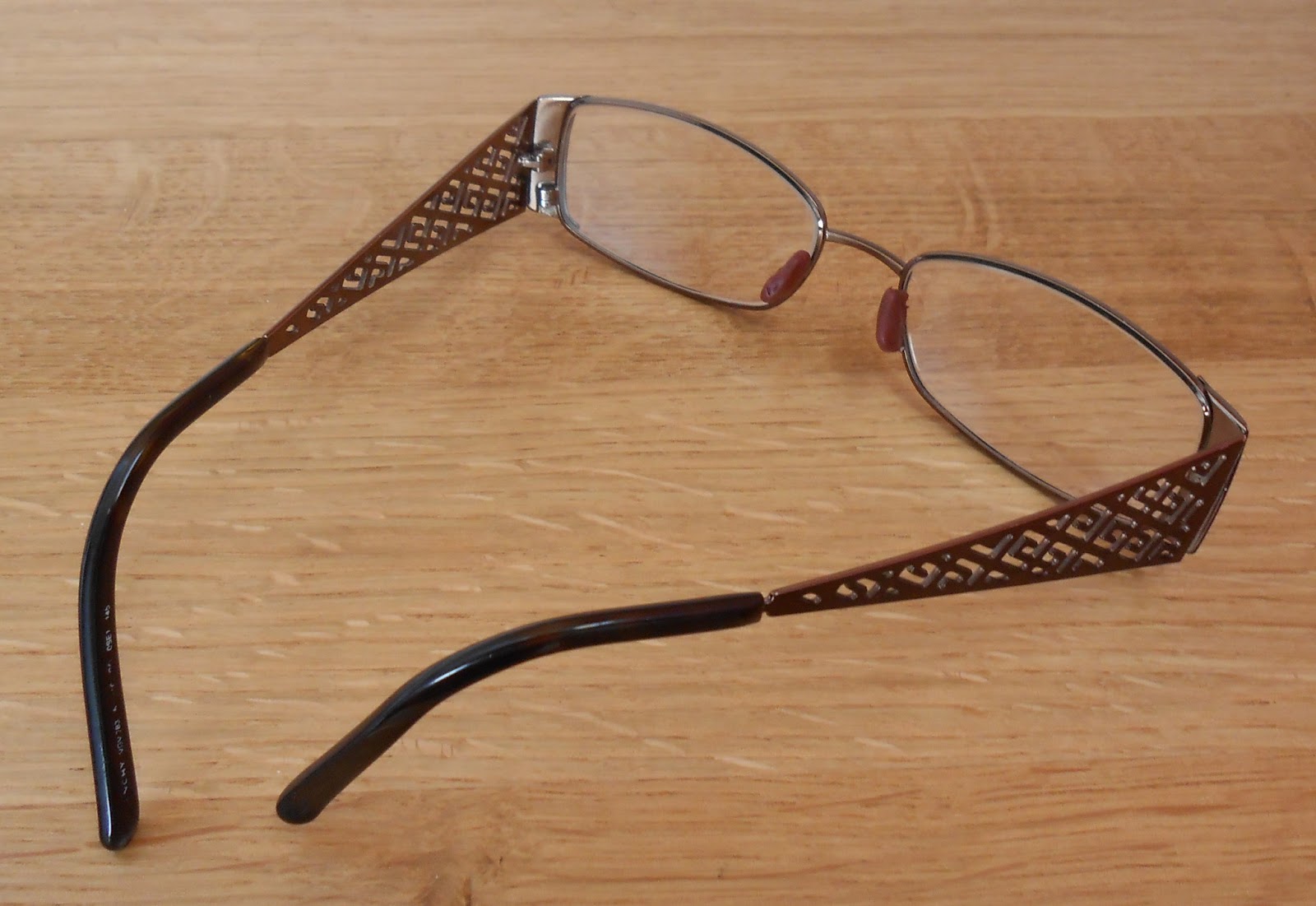
Givenchy glasses by Sugru


The nose protectors fell off and were lost.  The nose developed an unsightly blood blister from the metal bits jabbing in.   

Not only mended and comfortable, but customised to fit nose and provide perfect symmetry.


Sewing Box by Sugru


Expandable sewing box, bought for 3 Euros in the St Leger brocante circa 2005, with one broken leg.  Has stood on its broken leg for over 6 years and fallen over each time used or hoovered around, as husband declared carpentry repair of broken leg 'not easy' and consequently it went to the bottom of the DIY list.  Even the things at the top of the DIY list wait 6 years.  Glue didn't work, but Sugru did!

Lamp by Sugru


This lampshade cost me 50c in the Carrieres brocante, I know it's not the fashionable shape, but the lovely organic pink glow seduced me.  I found an old IKEA lamp stand in the basement with lots of bits missing, and a bit of another old lamp stand;  YES!  Moulded together and made strong and straight by Sugru.


Chipped Swiss Army Knife by Sugru


Thursday, April 25, 2013

Measles and Badgers

The death of someone is the death of a whole world, and the death of a child the worst of all,  unbearably painful for the loved-ones left behind.  We can't want children to die or suffer permanent damage from measles.

At the same time as the measles publicity comes news about diabetes:  drinking one can of fizzy drink a day seems to increase your risk of developing type 2 diabetes by 22 percent.  The whole history of sugar, in particular corn syrp and its mass introduction (as big as a vaccination programme) has caused untold disease, suffering and death, and the fatal addiction continues (http://www.gracelinks.org/133/film-review-king-corn).    Road traffic accidents seriously injure 200 000 people a year in the UK, kill 2,200.  The fact is many aspects of our behaviour, the conditions in which we find ourselves or the choices we make kill and maim us on a regular basis, a lot of them a result of wrong-thinking by scientists, dare I say it, or governments or epochs, and by commercial interest.  Where do we start when we want to reduce human suffering?

One pointed thinking...on the end of a needle
I guess the thing about vaccines is, it would seem to be a simple solution with no price to pay, the disease can be prevented and eradicated, just a little scratch and you're done.  That is, IF there is no deeper or wider price to pay than the little scratch, what if we are only scratching the surface of this issue?   Our information on the subject may not be totallyl unbiased:  some very big companies are making some very big money out of vaccines, and that money and the  need to keep making more money, means that these companies, sure as eggs, are spending some of that money on getting Big Access to our media world, our political world, our medical world, and our heads.

I heard on Radio 4 this morning that certain elements of yer British Public are cwoss with Doctors and have lost faith in them, because they believe them to have a vested interest in giving vaccines vis a vis a small fee which is paid to GPs for each one given.    GPs are rather hurt by this, according to the Dr interviewed.  This doctor might have shown a little more imagination, as it is undeniably true that there is commercial interest in vaccines, it's coming from behind the friendly and reassuring face of Doctor, from the companies that research, market, manufacture and distribute them, and this is big business and big business rules apply.    Is this the best way to spend society's money on researching health, reducing suffering and death?

The take on the MMR vaccines causing autism has been discredited and the last remains of possibility thoroughly ground under the heel of national publicity,  we are obviously totally stupid to have taken any notice of it, scoff scoff.  But what if Andrew Wakefield was onto something, just not exactly what he thought or could prove, because his approach was flawed? (allow Andrew Wakefield to reply and open a balanced debate by watching this http://www.youtube.com/watch?v=d7kbWfsygG4).   History illustrates that Scientific Certainty about health never lasts forever.  Firstly, even if a few pre-disposed children develop autism triggered by the vaccine, then these children also are a world in themselves;  the question of who is at risk, who should avoid the vaccine should be researched with equal zeal.    But more than that, what do we know about the proliferation of 'unexplained' degenerative diseases in 'later' life, for example?  How can we study and know the quality of life and health over a life time of every human world living on this planet?  Is it really so simple, so black and white?  I can't know from the material evidence available, the studies haven't been done, probably can't ever be, the task is too multi-faceted, too huge.

It is easy to fork out for a vaccine in a little vial, pay the company, get the protection.  It is much harder to look at the wider picture;  what makes some people more immune than others, what makes some people less vulnerable to serious complications from a disease, what is the exact nature of the disease, it's origins, it's place in the general picture, what makes it develop?  We are not merely herd animals, meriting herd immunity, we are, or at least we have the potential to be more.  As Monty Python put it in the Life of Brian, we are all individuals, more and more so, in every aspect of our being.

The Relationship between the Bug and the Being
When no other solution exists, we have to use the blunt intstrument, but what if other solutions, much more marvellous, were to exist, if we went out to find them?  What about the really interesting questions such as;  how come some people are naturally immune, or suffer less from it, what makes people suffer serious symptoms or complications, what place nutrition, pollution, mental health, spiritual nourishment, love, childhood....whole human health, the relationship between the Bug and the Being, so, so interesting...

Now, onto badgers.  Are we going to send out a team of killers, or are we going to set up a team of creative solution seekers?  
In our desperation to cut down on TB, we want to 'kill' the source - badgers as the Government erroneously sees is (the scientists consulted don't).   Well, badgers are victims of TB, there are the rats as well...and so on.  But why are our cows falling for it, why is it worse?  Could the way we raise cows cause the disease to set in, and infect the badgers?  Imagine we wipe out 70 percent of the badger population.  Do we want the badgers to build up their population afterwards and start spreading TB again?  (after all, we aren't leaving the TB immune badgers behind, we're just using a blunt culling instrument).  Or do we want them gone from Britain forever.  And if they go, will there still be TB?  Yes.  And who next?  And what are the consequences in the general ecology of wiping out a species? (don't know don't know don't know but kill anyway, panic).

Getting our relationship right with nature
I observe, and I have infinite faith in humanity when I say we have in our world an abundence of creative thinking humans who can turn their attention to nature and work with it.  And I have equal faith that Nature can offer us an abundence of solutions, if we know how to work with her.    Yes folks, we have to get our relationship right.

There is a global tendancy to see ourselves as the hapless victims of a capricious Nature, clearly a heartless killer by nature,  or to try to be the capricious and heartless killer of nature in order to control it and be its Ruler.

Nature has the potential to be a horrific killer,has been in the past, and is also the undisputed basis for our physical existence, an abundent wealth of possibilities.  Here we need Discernment;  in our epoch, nature unheeded, unthought out, neglected and abused,  is a totally different thing from nature observed lovingly and respectfully without commercial bias,   thought about attentively and intelligently, and worked with co-operatively.  And who does all this?  Humanity.

We are beginning to understand (those of us who care to look at ecology and so on)  that it functions as a whole system, and can be balanced, or not.    You can't kill of bits of it without causing shifts and holes and reactions in the whole thing.   For examples of the extraordinary success which happens when genuinely free from vested interest agroecology turns its great mind to real solutions for feeding the world:  see what happens when Agroecologists think out solutions for areas where natural disasters are the norm, seeking out nature's own solution and putting it into practice (Harvest of the Future film by Marie Monique Robin) rather than 'killing' off the 'bad' bits (the Monstanto Global Disaster Programme).  This is THE film for our future, virtually impossible to hear about it in English, but this site works http://zero-games.ru/video/Les-Moissons-Du-Futur.html

So if we get our relationship right with Nature, how will this help us with Measles and Badgers?

Thursday, December 6, 2012

Human Business, Humanity Profits

Today my mum and I were bemoaning the fact that business ethics seem to differ so much from human ones.

In Britain, business ethics seem set apart from human ethics, and yet are increasingly dominating our human society - for which everybody (but a very privileged few) suffers.

For a relatively mild example (compared to companies that lie cheat and kill) but an important one;   Amazon and Starbucks are not paying tax by setting up in Jersey.   It's perfectly legal, and that seems to be the end of the story.  This despite the fact that Amazon is now a market leader, surely it doesn't need to behave like this?  It could be contributing positively to society, taking a philanthropic approach which would be good for business and good for society.  Is it just thinking about the business ethic PROFIT?

Here is an idea for getting business ethics back in line with human ethics (from the film "The Challenge of Rudolf Steiner" rudolfsteinerfilm.squarespace.com)

"Customers and bankers at Triodos bank are trying to work in a different way with money:  greater tansparency, greater responsability, and greater consciousness about the way the money deposited is actually used.

Peter Blom is Chairman of the Executive Board of Triodos Bank:

"I am convinced that we need to concentrate more on what is really needed in society, and then make that into a feasible business.  There is profit of course, you cannot do without that - but you don't have to start with profit.  Profit is the result.  This relates to what Rudolf Steiner said - profit is not something to aim for but is a sign of a healthy operation, emerging from healthy transaction.  This is a much better way of looking at profit than putting it there as a goal, as an objective, making everything work for that goal.

Steiner always had the human being at the centre of his thoughts, whatever he was talking about, economics, medicine, whatever....in most of our thinking now we exclude human beings - it is about a system and we must fit into  the system.  What he did lets us take each human being as a starting point; let's design around debt for example, in a way which serves human beings.

We cannot achieve this by just repeating or copying Steiner.  Our challenge is to work with what he brought us."